Tuesday, October 18, 2011

Custom Clothing - Use of Cotton Handloom

You feel special when you get a designer clothing unique and exclusive for your wardrobe. And more special if the money you spent goes for a good cause. The designer dresses which bring rural hand loom weavers an income potential. Fashion Studio Urban Purple with Supezas presents the Concept of Custom Clothing for Woman’s where you design your own dress and we produce for you using the best hand weaved Organic Cotton fabrics. Personalized Clothing is one of the happening concept and most fashion conscious and health conscious women today desires. Custom fit clothing or the Boutique Concept comes to picture when your order comes to you as a personalized dress only for you.

Fashion Flat Designer
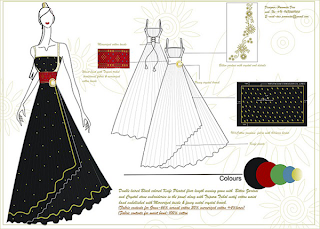
Sketch of the Gown


Being technical clothing designer and professional commitments and busy work schedule pull us back. However, my leisure times spent on clothing design that brings about some value addition to the weavers community. I grab any opportunity as a fashion designer to help the weaving community and choose to get involved and design cloths as per their textile motifs. The motivation for my fashion studio is to give them platform to showcase hand-loom creation in fashion market worldwide. I have tried to give a different concept to organic cotton evening gown using Bengal Jamdani and Tripura hand-loom fabrics. The acceptance of this fashion concept helps keep their traditional weaving style alive and provide adequate wages to weavers.


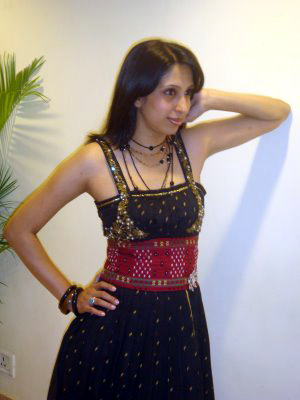
I have tried to depict the scope of designer dresses on handloom fabric without compromising glamour and elegance look. Organic cotton died with vegetable die makes it environment friendly and thereby there is no side effects if you wear it for a longer time at any place and any occasion. I have used traditional hand weaved Jamdani cotton with golden thin lurex border. Weaved with all over Jamdani Buti to give a rich look to the fabric. I have taken the tribal hand loom of Tripura with vertical and horizontal stripes with scattered embroidery in different colors for waist band.To give a feminine look I have used bitten Zardosi and crystal embroidery panel as a strap and crystal brooch at the overlap lair. Also have used Mercerized cotton yarn for the waistband tassel and Concealed zipper to give shape and fit.

People Behind the Work :


The Weavers of Basudebpur Shilpa Samiti put their outstanding effort and produce Hand-loom Saris and Fabrics.Their Creativity and optimism to take up any design gives encouragement to think something innovative.. The Weavers are capable to put forth any kind of geometrical designs to a live fabric or sari within no time. This village is near Medinipur West Bengal with population of 400 and 67 families of Tant Weavers having average family annual income of Rs.6685.With Improper communication and minimal Govt Hand-loom Weaving is decreasing rapidly.Feel proud that the dress that I am wearing is giving some people smile in their face and helping weavers who seek the most needed attention. Through my designs I am trying to reach those people who can be of help to them. I feel success if I get to help one of them. We want the Organic Product but the means these products are being produced and how ethical the producers are not taken in to consideration. What they want is the end product. The main purpose is to make the best use of organic cotton and hand weaved fabric and also makes use of the talent who deserves the due recognition for their hard work.


      Born and Brought up in Agartala Tripura, and studied Fashion in NIFT Kolkata and settled in Bangalore. Started as a Freelance Fashion Designer and Tech Pack Designer Paromita has sailed a long way for the ultimate aim to become the proud daughter of Tripura and trying herself to become one of the preferred designer. Currently Owner and Designer of URBAN PURPLE Fashion Studio an Integrated Fashion Design Studio and Apparel Manufacturing Unit based out in Bangalore. Also Urban Purple has its own Clothing Line for Men’s wear and Ladies Wear Clothing. Paromita Das Technical Designer and Owner of Urban Purple  Fashion Studio with its In House Garment Manufacturing Unit provides its  Customers all in One Solution to New and Up Coming Apparel and Clothing Brands and Private Clothing Line Sheet owners and facilitates with Fashion  Design Service, Tech Sheet Design, Sample Development and Apparel Production under one Roof. Urban Purple Fashion Studio handling various clients in USA and Canada and work with them as Creative Design Partner and Consultant and Technical Design Firm facilitating Garment Tech Sheet and Size Specs, Designer Clothing Consultation, Apparel, Tech Pack Design.

Monday, October 17, 2011

Manipur Handloom - Custom Fit Garments

Fashion Studio Urban Purple has been keen to explore the Handloom of various part of India since early 2006. During its exploration we went to the remote area of Manipur and Nagaland where we find the most beautiful craft of Handloom fabric from the looms of the handloom weavers.

Handloom and Cottage Industry of Manipur is ignored as much as the place itself is in India. They belongs to the same 7 sisters States which are being deprived and almost cut-off from the main land of India.  In this section I am writing my experience in working with people of Manipur. Working with people who work on ground level is always been an exiting experience and over a period of time this has become passion to work with them and work with them closely. My Designer Label "Paromita Das" is always inclined towards Hand-loom of different parts in India. This is another string of my inclination towards Manipur hand loom and working with modern fashion trend. The creation fits the current fashion and the silhouette would fit for all occasions. Pleats and Frills embellished with fabric flowers enhance the look of the dress. Short dresses always lead the trend! You can find your ideal cocktail and prom dresses in every party. The collection is designed to suit fashion forward people who like to wear dress that they can carry on quite often and fit the bill for all occasion.

Inspiration:

Fashion Studio Urban Purple got opportunity to visit many places as independent and Freelance Fashion Designer and Consultant. I visited Manipur to consult and learn the use of Manipuri Fabric for modern outfits. There I found the fabrics with fabulous colors, texture also quite Eco friendly and fashionable which can be used for modern cocktail dress and gowns. So the couple of designs which I have incorporated are mainly keeping in mind the handloom fabrics of Manipur. I found these materials have great potential for making dresses which are quite suitable for summer since they are 100% cotton and at the same time give attractive and trendy look if presented properly.


Show Stopper Trupti

Manipur Hand loom Fabric and its Inception:

The traditional skill of hand-loom weaving is a matter of status symbol the women folk in the state, also is an indispensable aspect of their socioeconomic status. This is a share of 27.04% of the total weaver‘s population in Manipur. Notable feature of Manipur Hand-loom industry is entire workforce is women. The women are found to be involved in weaving, dyeing, bleaching and trading of finished products and yarn. Apart from cultivation and agriculture, handloom weaving provides the highest employment to women folk of Manipur. This is a natural cluster of handloom it owes it origin to the inherent need of the people of Manipur.

Their Limitations:

In Spite Manipur Handloom is most important cottage industry in the state. Around 40% of weavers are idle partially for (a) Presuming that bulk production would not find market.(b) Lack of modern improved design techniques and market awareness. Promoting them in Domestic and International market to provide them work and some extra income and keep them up in the main stream. As an independent and freelance fashion designer a small effort from my end to create awareness of this elegant traditional art of weaving our country stores in it and is slowly diminishing.


Western Outfit on Handloom Fabric
European Design on Hand-loom Fabric

Support Strings for Making This Collection Successful:

Our special Thanks to Mr. P. Sachitananda Co- owner of Span Inc for his immense support through the collection presentation and back-end support in terms of stitching and processing of the collection. Span Inc sister concern of Palyam Textile Processors established in 1971 and has versatile fabric process house and leading in processing fine fabrics for exports and domestic industry. Also Span Inc has span of Manufacturing and Exporting woven and knitted fashion garments. Span Inc has full range of Apparel Cut and Sew service. Span Inc is also supply all qualities of Fabrics and distributor of Cotton Lenin yarn fabrics.

Manipuri Hand-Loom Fabric
Weaver Weaving Manipuri Fabric

Miss. Trupthi is a Model, Fashion Choreographer, Dancer and Actress and most prominent personality of Kannada Film Industry. She has been my support since I started my fashion shows and has done many notable shows and modeled for many television shows among with me is the show on Zoom TV a national channel broadcast-ed across


Fashion Designer Paromita and Show Stopper - Trupthi


Saturday, October 8, 2011

Orissa Handloom

Hi Readers hope you are enjoying my posts. This is Paromita Das - Owner Fashion Studio Urban Purple - I am presenting the fragrance of Orissa which gives insight to the Hand-loom of Orissa. This time I have came up with the Hand-loom fabric of Orissa as this is my second Home State. For Fashion Designers worldwide the Hand loom of Orissa gives inspiration with its rich cultural heritage rich fabric and sari. However, to cope up with the current trend and modern women’s need the designers should mold themselves to match the fashion trend and makes it more viable towards the modern world. In my collection “Fragrance of Orissa Hand-loom” I have tried to bring awareness about the rich hand loom of Orissa and how it can be molded to the modern and contemporary silhouettes. This collection is somewhat close to the thought process which I have gathered during my visit to Orissa. In this collection I have used Bomkai mixed with Cuttacki and Ekat. These are the core fabrics of Orissa with numerous variety and flavor.As Freelance Fashion Designer and busy schedule of my design studio work of Tech Pack Design I get little time to fulfill my dream of working with Indian Hand-loom Weavers.However, when I get little time I get associated with them.


Style On Orange
Black Perl 

Historical Significance of the Fabric Colors and Motifs
"Bomkai" design locally known as "Bandha" design is an Hand loom Technique of Southern Orissa “Sonepur”. The specialty of this fabric is designs on the fabric are created using needle and simple work of needle on Jala (Net Weaving) technique on hand loom. Motifs are influenced by tribal art with Temple patterns border and elegant color palette. The Borders are featured with ornament border. Border motifs are influenced by Temple, Kumbha, Rudraksha etc. Falling Edge of Bomkai fabric pattern on hand Weaved from gold or silver colored silk threads and patters like rukha (pestle, stick), Dombaru, Kanthi Phoola (small flower), Kalera (bitter gourd), Shankha (holy musical instrument) peacock and fish. Bomkai is also famous for Geometrical Tribal Designs. Specialty of Bomkai has its contrast borders, heavy designs with a close relation with Jagannath culture, four basic colors which commonly found on the Cloths of God Jagannath Black, White, Red, Yellow orange and is extensively used in Bomkai fabrics. The design and color palette makes Bomkai stand out.

Orange Balloon
Red Rose
This presentation of Orissa Fabrics is just beginning and Our Fashion Studio is working and trying to support the Hand-Loom Weavers Through designs and trying to show how hand-loom can be used not only for saries but also for western outfits. The motive of this blog is to convey and show the benefits, of those  Eco friendly fabrics and  handicrafts in European Fashion World and also American and other western countries fashion consumers.as a Freelance Fashion Designer and with no other support I have tried to make use of it in the best possible way and there would be a lot more coming up in my upcoming collection.

Friday, September 30, 2011

Tant - Handloom of West Bengal


USE OF BENGAL TANT

Hi Friends, This is Fashion Designer Paromita Das Again and on my this post I am trying to show the fragrance of Bengal Tant handloom which could be a great option for not only for those who wear saris but also to the customers who would like to feel the comfort of organic and comfort of our traditional Tant without leaving their existing lifestyle and outfits. So to say, My Collection here is to show the innovative use of traditional handloom of Bengal Tant in Modern and contemporary outfits.

row 2, cell 1 row 2, cell 2

In this collection I have incorporated two well know and Most traditional Bengal Tant Handloom fabric which is Daccai Jamdani and Tangail. So far this was confined to Saris however, I found it can show its true importance if it is also used for contemporary dresses and gowns. Like I said on my previous post where I have used this fabrics for an evening gown. Being a Technical Fashion Designer and from Bengal it inspired me to do something creative on those handloom and also try something which appeals the young and happening consumers. I sincerely feel there is a lot of scope of using those handloom fabrics to present the customers with something new which will give a mid way of new stuff and at the same time keeping and growing this traditional culture intact.

row 2, cell 1 row 2, cell 2


The famous of all is Bengali cotton which is famously known as “Tant”. Its considered to be the most comfortable supporting the hot climate. Bengali cotton are commonly called Tant. Its hand woven having bright colors with decorative borders. Triumphing over the trauma of partition, weaver families which migrated to West Bengal in the 1950’s have helped keep alive a priceless heritage of highly stylized weaving techniques honed over generations. The hand-loom industry in the eastern region has had its share of bumpy rides, but Bengal hand-looms have survived the ups and downs to become a household name among connoisseurs of textiles.


row 2, cell 1 row 2, cell 2

DACCAI JAMDANI:

Daccai Jamdani is distinguished from its mutant cousins by its very fine texture resembling muslin and the elaborate and ornate workmanship. In Bangladesh, weavers use fine Egyptian cotton, while the Indian weavers use only indigenous raw material. The Daccai Jamdani is woven painstakingly by hand on the old fashioned Jala loom, and many take even up to one year to weave a single sari or fabric. These Jamdani, which are literally “woven dreams”, are the most sought after saris and fabrics today.

OTHER JAMDANI:

While the Daccai Jamdani is strictly a party affair, the other Jamdanis are much sought after by fashion-conscious working women for their elegance. These are mostly Jamdani motifs on Tangail fabric and are generally known by the confusing no-men cloture of Tangail Jamdani. Tangail, Dhoneokali, Shantipuri and Begumpuri are other popular styles of Bengal handlooms in the lower price range. Of these, Tangail which comes from Fulia, has a fine texture, with its 100s count fabric and highly stylized motifs, while Dhoneokali is known for its stripes and checks. Over the years, the distinctive patterns have merged as weavers started experimenting with various combinations of design and yarn, so much so, it is now difficult to distinguish between the various styles, unless one is an expert on texture.